A Parent’s Guide to Building Problem-Solving Skills for Kids
The importance of teaching children to think critically from an early age cannot be overemphasized in light of the quick rate of change in our modern world. Merely memorizing facts or the syllabus is not enough; children must also be able to think, analyze, and solve problems. These skills help them perform better in school and face real-life challenges confidently.
In this blog, we will share ways to boost kids’ reasoning skills, from fun activities to daily habits you can easily try at home. We will also explain why critical thinking matters, age-wise strategies, real-world examples, and tips from trusted education approaches like the best schools in Jaipur or supportive environments.
Why Critical Thinking and Problem-Solving Skills for Kids Matter
Developing problem-solving skills for kids isn’t just about doing well in school it prepares them for real life, emotions, decision-making, creativity, and independent thinking. Researchers and child-development experts agree that critical thinking improves many parts of a child’s growth.
1. Better Academic Performance
Critical thinkers understand subject material more deeply and perform better across school subjects. They don’t just memorize, they analyze, connect ideas, and apply knowledge in new situations. Studies showthat students who regularly practice critical thinking do significantly better on problem-solving assessments and academic tasks.
2. Makes Decision-Making Stronger
Kids face choices every day, such as what game to play, how to organize homework, and how to spend free time. Critical thinking skills in children teach them to weigh pros and cons, consider consequences, and make thoughtful choices, rather than quick or emotion-based reactions..
3. Encourages Curiosity and Deep Learning
Instead of stopping at the first answer, critical thinkers ask why, how, and what if, which naturally grows curiosity. This curiosity helps kids explore beyond surface level and deepen their understanding of any topic, from nature to math to social situations.
4. Builds Confidence & Resilience
When children practice problem-solving skills and find solutions on their own, they feel capable and confident. Facing small challenges and learning from mistakes also builds resilience, the strength to keep trying even when things get tough.
5. Prepares for Real Life & Future Challenges
Today’s world is complex and constantly changing. Critical thinkers can break down problems, examine evidence, and adapt to change, skills that are essential for future careers and lifelong learning. They become creative and flexible thinkers, not just rote learners.
6. Improves Social & Communication Skills
Thinking critically helps kids understand different viewpoints, communicate their ideas clearly, and solve group problems respectfully. It makes them more empathetic and helps build better social relationships with classmates, siblings, and friends
How Thinking Develops at Different Ages
Early Years (3–6 years)
Kids at this age begin to ask “why?” and “how?” questions, which is an excellent foundation for thinking skill formation. Parents should encourage curiosity and independent exploration.
School Age (7–12 years)
At this age, kids better understand logic and reason. Structured activities like puzzles, stories with choices, and group discussions help children develop problem-solving skills rapidly.
Teens (13+ years)
Now the focus should be on abstract thinking and evaluation. They should be involved in debates, research tasks, and decision-making situations to strengthen both their analytical skills and critical thinking.
Family-Based Ways to Boost Kids’ Reasoning Skills
Encourage Open-Ended Conversations
Simple conversations at home develop thinking skills. Questions like:
“If you were to solve this problem, how would you do it?”
or
“Imagine if… what would happen?”
These types of questions lead children to deeper reasoning.
Let Them Explore & Ask Questions
Kids shouldn’t be prevented from asking “Why?” Parents should encourage and help them explain. This habit helps them become analytical thinkers.
Model Critical Thinking
Share your own thought process, and explain decisions, consequences, and choices so they learn real-world logic.
Teach Reflection
Discuss after work: “What did you learn today? How did you do it?” Reflection is also part of thinking skills.
Practical Activities to Improve Problem Solving
Puzzle Games & Brain Teasers
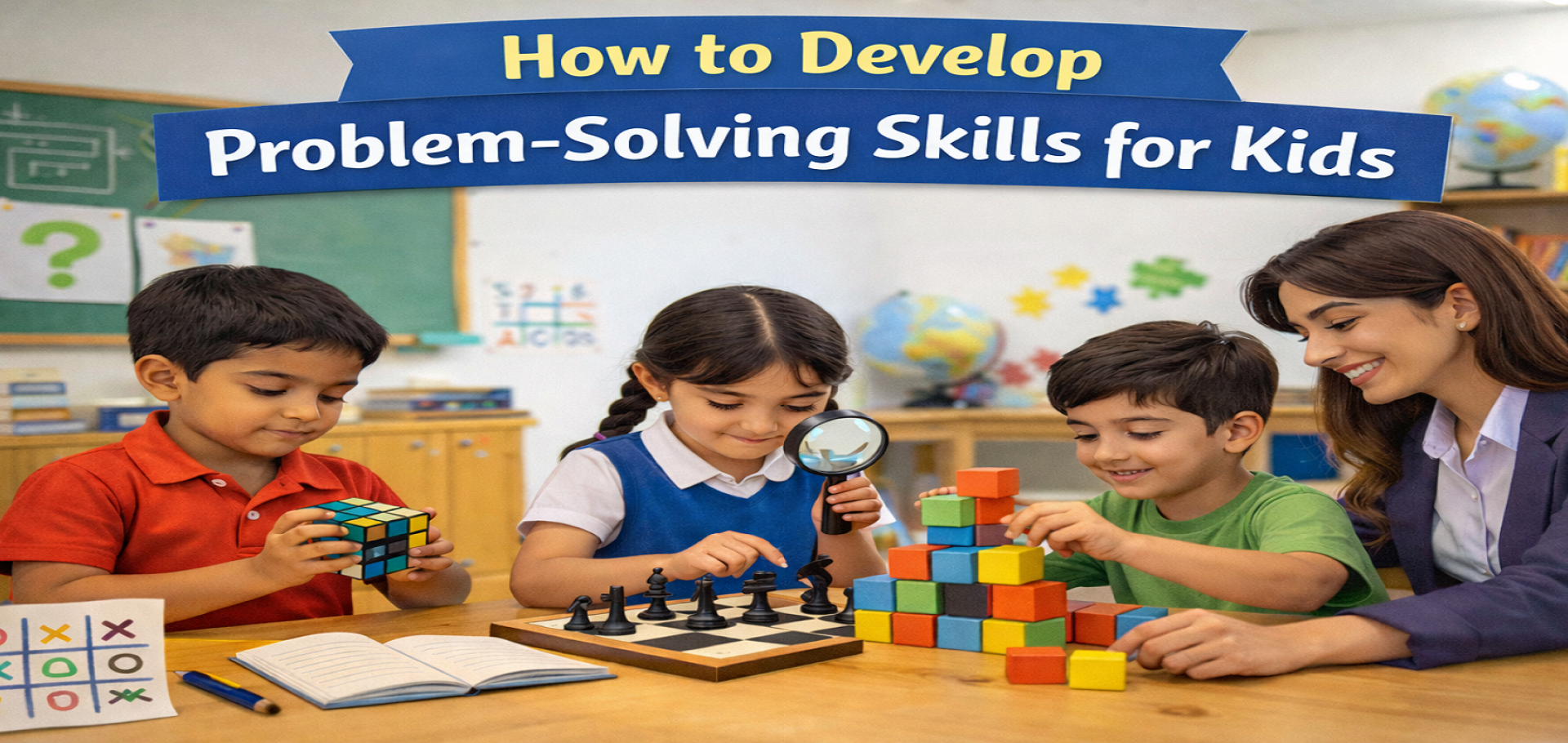
Puzzles like jigsaw puzzles, riddles, memory games, etc. Children are taught problem-solving and logic. Puzzles teach patience, logic, and pattern recognition. Brain teasers help them look at problems from different angles.
Strategy & Board Games
Chess, checkers and age-appropriate strategy games develop planning and foresight.
Chess enhances problem-solving skills for kids by showing how multiple possible moves can lead to different outcomes.
Building & Construction Challenges
Activities like building blocks or LEGO teach spatial reasoning and creative solutions.
Kids solve balance, structure, and stability problems.
Outdoor Treasure Hunts & Exploration
Outdoor games like treasure hunts require logic, deduction, and teamwork.
Outdoor exploration sharpens observation and decision-making skills.
Role-Playing Games
Pretend play scenarios (like grocery shop, doctor role play) teach empathy, decision-making, and scenario analysis.
Real Life Math & Everyday Problems
Counting change in shopping, dividing snacks, and planning steps for everyday tasks can become problem-solving opportunities.
Collaborative Storytelling
Family or group storytelling, where they have to develop creative plots, is one of the best ways to boost kids’ social reasoning and idea exchange.
Technology, Media & Digital Learning
Modern tools, if used wisely, can further enhance thinking skills:
- Educational apps that challenge logic and patterns.
- Digital literacy teaches kids how to evaluate online information critically.
(Always balance screen time with hands-on activities.)
How Schools Support Critical Thinking
Structured Learning in the Best Schools in Jaipur
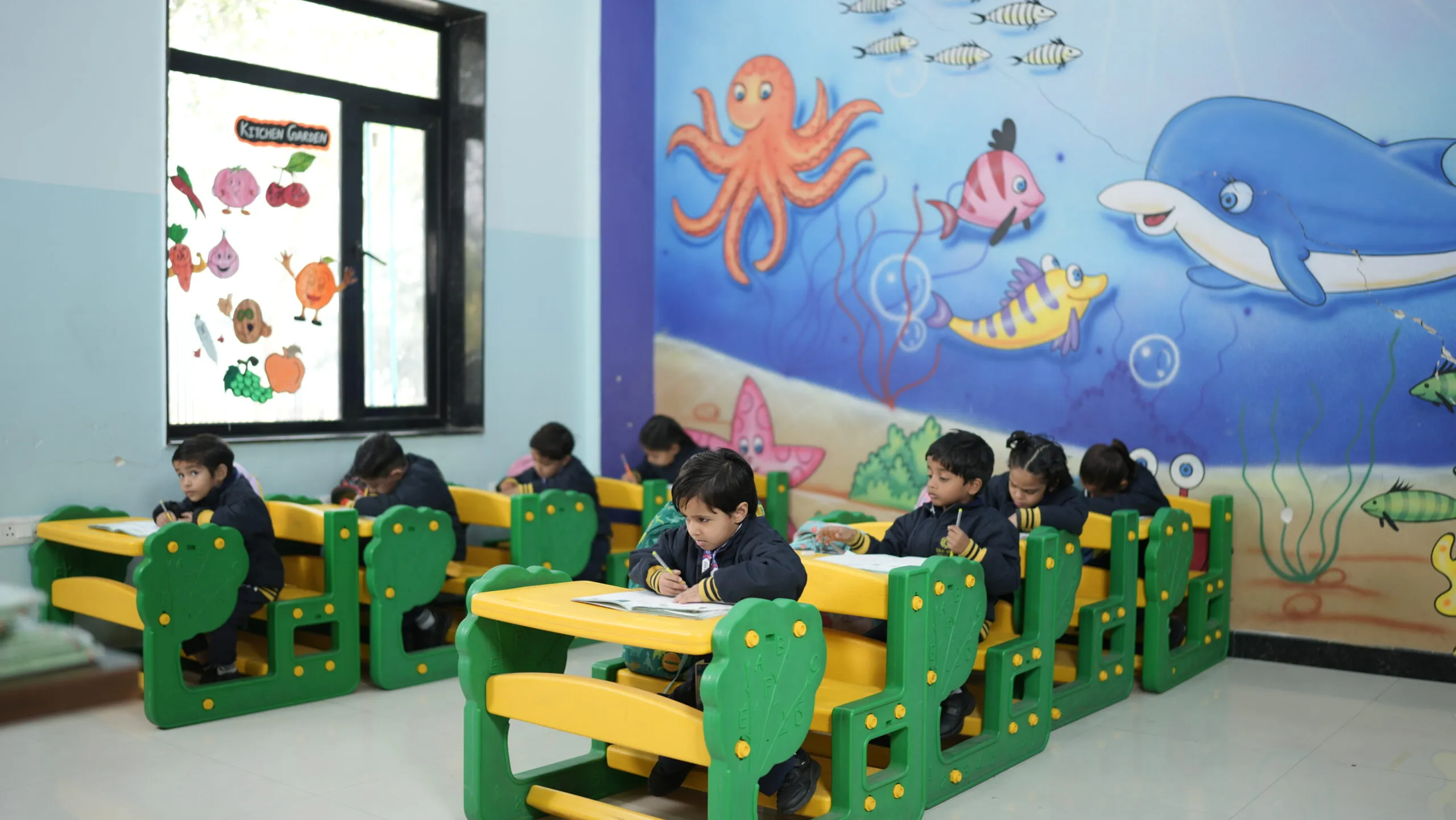
Schools like Gyan Vihar World School and other best schools in Jaipur make thinking development a part of the curriculum through creative projects, group problem solving, and interactive learning.
- Project-based learning
- Brainstorming sessions
- Group debates
- science experiments
(Schools integrate playful and reflective activities for deeper thinking.)
Local schools in Jaipur focus not only on academics but also pay attention to skills like reasoning and problem solving, which create future-ready learners.
Role of Schools, Especially the Best Schools in Jaipur
Children’s intellectual development isn’t limited to the home. From preschool to higher classes, structured learning environments nurture critical thinking.
Schools like Gyan Vihar World School in Jaipur provide multi-dimensional learning where academics work with creativity, logic, reasoning, and real-world problem-solving. Through innovative activities, interactive sessions, and project-based learning, the school makes critical thinking a natural part of the classroom.
Conclusion
Developing problem-solving skills for kids and critical thinking skills in children is a lifelong investment in their future. These skills are built naturally, not just through classroom learning, but through daily life conversations, fun activities, games, nature exploration, reflective discussions, and a supportive school environment. Schools like Gyan Vihar World School in Jaipur help children strengthen these abilities through innovative teaching methods, project-based learning, and interactive sessions. If you want, start with small daily steps: puzzles with breakfast, a curious question before bed, outdoor exploration on weekends, and soon you’ll see your child thinking more independently and confidently!
Read Also: CBSE vs RBSE Schools
FAQ: How to Develop Critical Thinking in Children
How early can we start building problem-solving skills for kids?
Critical thinking can begin as early as preschool activities like blocks, puzzles, and asking simple “why?” questions, which develop curiosity.
What is the difference between critical thinking and problem solving?
Critical thinking means analysing information logically; problem-solving is applying that thinking to find solutions. Both are connected and essential.
How do everyday activities help thinking skills?
Even daily tasks like cooking, planning steps, comparing choices, or dividing tasks teach kids to think through a problem and weigh options.
Should we avoid screen time completely?
No balanced and purposeful use of digital tools can support logic and critical reasoning, but always pair it with physical and reflective play.
Can schools help even if parents are busy?
Yes, schools in Jaipur and quality learning environments use structured activities and collaborative projects to develop critical thinking skills in children daily.